


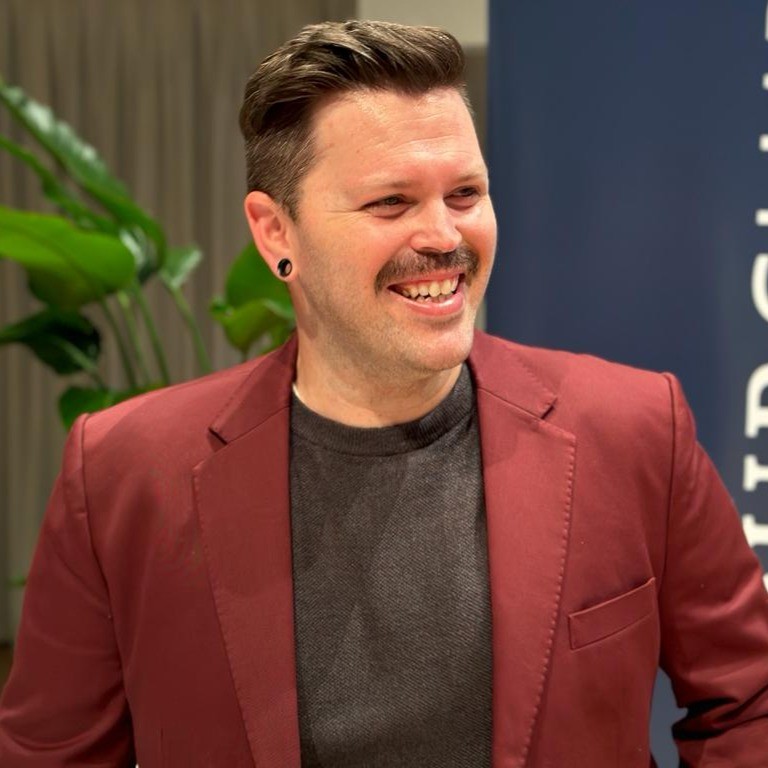
Let’s start simple. Who are you, and what do you do with social data that others might not expect?
I’m Heinrich (most people call me Hein, which conveniently rhymes). What might surprise people isn’t what we do with social data, but how seriously we treat it as a strategic input rather than a reporting output.
My team focuses on empowering senior decision-makers with contextualised intelligence and not just dashboards for dashboards’ sake, but insight that helps leaders understand impact, resonance, and relevance. Especially in complex, regulated environments, social data only becomes powerful when you connect it to reputation, behaviour, and long-term outcomes.
A big part of our work is slowing data down enough to make it meaningful.
What’s something in our industry we pretend to understand, but don’t?
I don’t think we lack understanding, but we often overestimate certainty. We talk very confidently about impact, attribution, and optimisation, when in reality, much of what we measure is directional rather than definitive. Metrics are fairly universal, but interpretation is where things get messy.
The real skill isn’t knowing the numbers; it’s knowing their limits, and being honest about what they can and can’t tell us.
What’s a moment this year where social data helped your team do something bolder, faster, or better?
There are actually multiple moments that stand out for me in 2025. We’ve managed to successfully benchmark our perception from an external point of view by running qualitative research to understand the foundation of our reputation.
This has become a North Star for communications planning, allowing us to assess whether we’re genuinely shifting perceptions over time and not just generating noise. In an industry where impact isn’t always immediate, that clarity has changed how we plan, prioritise, and measure success.
What’s one belief about your audience that social data completely upended for your teams?
A long-held belief was that audiences respond primarily to messaging volume and visibility. Social data helped us see that perception and trust are shaped far more by consistency, credibility, and behaviour over time.
That realisation pushed us away from short-term optimisation and towards understanding how communications contribute to long-term reputation and behavioural change, not just immediate engagement.
If you could build your dream social intelligence team from scratch, with no legacy and no limits, what roles would you include?
I’m actually quite fond of our current structure as it works. But if I were starting from scratch, I’d bring data architecture and engineering directly into the team.
That foundation would allow insight specialists to spend less time wrangling data and more time interpreting it, connecting dots, and advising the business. The dream team isn’t bigger; it’s better connected.
When do you feel like you’re doing your best work?
When I’m equipping and empowering my team. Their curiosity, drive, and ambition push the work further than I ever could alone, and that energy feeds straight back into better thinking and better outcomes.
What’s your browser history giving away about you this week?
The majority will be German translations 😀 as well as YouTube live shows (I like listening to live music while working, as I get an applause every now and then). Most of this will be supported by either Gemini Gems and ChatGPT; both are great sparring partners for my thinking.
The rest will just be my usual bookmarks - Google Apps and our social listening tools.
Get Social with SILab


