

Emily Podell
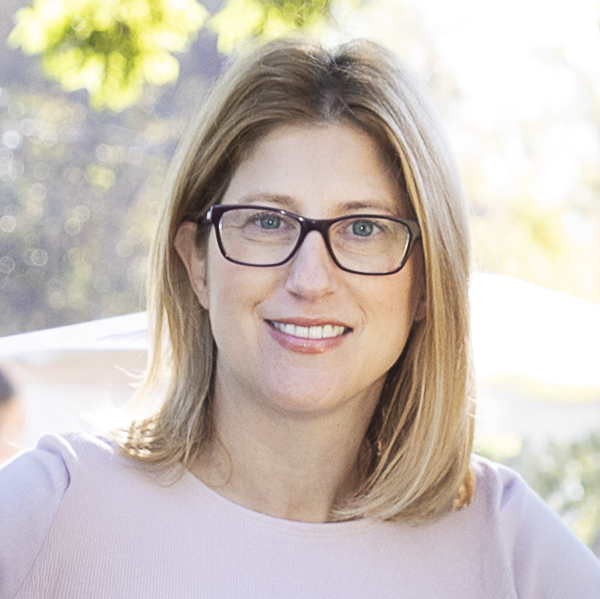
You’ve been recognized three times now. What do you think your work stands for?
In keeping with the number three, these are the three philosophies my work stands for:
- Unbiased: To maintain credibility within my organization, I must remain unbiased in researching and analyzing the voice of the consumer on social media.
- Relentless pursuit of the full picture: Continuously asking questions like “what if?” and “why is that?” enables me to understand complex conversation dynamics.
- Amplify the voice of the online consumer: After fully analyzing drivers of conversation and attitudes, I focus on the narrative and visuals that will clearly tell the stories that need to be told.
What’s a hard truth you’ve learned about doing meaningful insight work inside real organizations?
I've learned that meaningful insight work doesn’t always translate into immediate or visible outcomes. Priorities shift, plans change, and some things may never see the light of day. At the end of the day, the work and its value often shows up in other ways, including building trust and continued demand for insights across the organization.
Has your perspective on social intelligence changed since you first started working in the industry?
Yes, without a doubt. Early in my career I worked in isolation and viewed Social Listening as a secondary report that informs future learnings. Today I see Social Listening as a discipline that can proactively identify current cultural trends, fandoms, crises, and brand perceptions with rigor. It can meaningfully shape decisions in real time rather than simply explain them after the fact.
What’s a piece of advice or framing you’ve passed on to others that seems to stick?
Find advocates of your work and foster relationships with them. I find this is especially true when working in a field that is lesser known. Advocates will vouch for the impact of your work and keep you top of mind for projects and opportunities. For me, advocates have been essential to growing Social Listening at Mattel, and I am grateful to be able to work with them.
What’s the one question you think the industry needs to be asking right now, but isn’t?
How does the industry bring more visibility and recognition to Social Insights as a discipline in its own right? How does the industry move from “what is Social Listening?” to “what are best practices for incorporating Social Listening into our business needs?”
My suggestion is a multi-pronged, generational approach. This can be done by offering college- and graduate-level courses and programs that introduce and advance Social Intelligence among younger generations (Gen Z and, in a few years, Gen Alpha).
For generations that didn’t grow up with social media, increasing awareness of the discipline and many use cases of Social Listening is key. For example, TED Talks and business podcasts are incredibly effective in reaching a multi-generational audience and could be useful in normalizing Social Listening as an important research and insights tool.
What’s something you once believed about audiences, platforms, or culture that you’ve changed your mind about?
Over 20 years ago I joined Facebook, Friendster, and MySpace. I thought social media culture was for updating your relationship status, sharing fun pictures, and wishing people “happy birthday”. I also thought that people joined platforms for bragging rights - the more you’ve joined the better. Suffice it to say, these beliefs have long since evaporated.
Today I view social media as a way to connect with others from a micro scale (niche fandom) to a massive scale (global event). Connection leads to back-and-forth conversation that can act much like a focus group without a formal moderator. Observing and analyzing the conversation has the power to impact product design, product launches, marketing, collaborations, PR, and so much more.
You’ve built your leadership and credibility. Now what do you want to build next? For the field, not just yourself
I want to help the industry develop frameworks for attitudes and emotions. Many of the Social Listening tools I’ve encountered display sentiment (Positive, Neutral, and Negative), leaving out attitudes or emotions. Sentiment does not accurately capture the multiple emotions within a mention or topic. An example I often encounter is that fans are overjoyed at the launch of a new product, disappointed it sold out quickly, and hopeful that more of the product is made - three distinct emotions that would likely be labeled as Neutral in sentiment. By aligning, standardizing, and adopting attitudes or emotions, the field can re-enforce the legitimacy of social listening as a distinct branch of research and insights.
Get Social with SILab


